Friday, March 17, 2017

MyMusingsSangSpeak- Superwomen I Met in the Journey of Life

Superwomen I Met in the Journey of Life
It was due since long that I wanted to dedicate an article to the Superwomen I met along in the journey of my life. In our everyday terms, we call them Bai, Kaamwali, Maid, Servant etc. or sometimes refer to them as Amma, Didi, Mavshibai. Nowadays, they are popularly termed as domestic help, housekeeper, house assistant, helphands and so on. Generally, they are the most discussed subjects amongst my girlfriends. They also form butt of many jokes as well.

As I am a Maharshtrian, I used to get terribly disturbed by the depiction of domestic help in Bollywood and other media as the Bai was always a Maharashtrian woman clad in nine yard saree with the nath (typical Maharashtrian nosepin). I literally felt like filing a PIL back then. With passage of time, however, I mellowed and took it as part and parcel of life.
As a child, I had seen the helphands at my grandmother’s and mother’s place, those who stayed with the family and were treated like family members. They were so dependable that children and house could be entrusted with them. They ate the same food as us, they took annual holidays to meet their families back home and were looked after even when they left their jobs or retired, with money sent across for their old age and medical expenses. With changing times, I saw my mother and mother in law opening bank accounts for their respective helphands and advising them about the importance of saving and depositing money in the bank or post offices.

We were brought up with the teachings that domestic helps always need to be treated with due respect and these teachings have stayed with me and seen me in good stead in life. My mother always said that these women brave so much in their lives, they fight poverty, work at home tirelessly, and work outside and still manage to smile and go on with life. Yes, these are superwomen indeed, I realised. My daughter too recently reiterated the same thoughts as those of my Mother.
Once I got married, I had to get used to a different lifestyle, with my husband’s transferable job, there was going to be no continuity in the domestic help I would be employing. In cantonments, normally, the quarters are provided with servant quarters and hence, getting domestic help was not much of a problem. In my first tenure, I was juggling with far too many hats….being a new mother, setting up home for first time, being hostess arranging nonstop family gatherings and friends get togethers and many more. RatnaBai was the Superwoman who came to my rescue and assistance here. She needed the servant quarter only to keep her household belongings as her new house was under construction in the nearby village. RatnaBai came from a well to do family, her husband dropped her at my place daily in the morning on a two wheeler. She went about her work most efficiently, in a no-nonsense manner with utmost cleanliness and discipline. She used to see my daughter, who was about 2-3 months then, sleeping peacefully and she used to tell me- Madame, this baby will become very naughty and her words came to be completely true.

In about a year’s time, we got posted to the North East region of the country and here the Superwoman happened to be Manju, who had two small children and was working because her husband had left her. In this area, mostly the women worked in the tea gardens and domestic help was hard to come by. The area we lived in was nearly jungle frequented by elephants and other such wild animals so not many ladies opted to work here.

Again, after about a year, time to move on and settle in a new place and home. Here, my superwoman was Sumitra, a clean and neat Bengali lady, who worked very well and taught me many things about Bengali cuisine. She used to carry the tender Neem leaves from my garden to add to her recipe of Baigun Bhaja. I learnt about the Kashundi and the palm jaggery from her. Sumitra also used to carry the extra stalks of cauliflower and the green pea shell covers, the ones we generally discard. She showed me how they use all these discarded vegetable parts to make tasty recipes.
She used to tell me about her daughter getting married and all the preparations she was doing by collecting various items. It so happened, that around this time, my husband had misplaced his watch, it was the one gifted by my father in law and I turned the house upside down to search for it. Our Sahayak suggested that as Sumitra was speaking of gifting watch to her would be son in law, we must check at her place and I said, why she would gift an old and used item. Despite my arguments, he did go to her house and clarified by asking to see the gifts. Eventually, my husband’s watch was found and I feel guilty to this day as to why did we doubt Sumitra. I repented and prayed to God to forgive me. Sumitra extended a loving invitation to attend her daughter’s wedding and I did so readily. She had this neat looking, well-kept house with happiness overflowing. God Bless Superwoman Sumitra.

Two years on and time to move to the capital of our country. For, the first year, I did not employ any help and managed all by myself. Once we shifted to government accommodation, I employed a superwoman named Gajendri. Here, the people were smart enough, but, the ladies would keep working for the sake of quarter and other reasons like husbands not working or supplementing family income as they could not meet make the ends meet.  Gajendri had 2 sons and one daughter and lived in a joint family with her in laws and there were about 11-12 people living in a single room quarter. I attended Gajendri’s kids’ birthday parties. Gajendri’s real sister Bala was her co-sister, she was married to her younger brother in law. Bala and her husband picked up the trash from our colony. Bala would come in as replacement when Gajendri was absent. Bala had 5 daughters and was pregnant for the 6th time. Bala’s husband would beat her up regularly and I would try to put some sense in both these sisters’ heads as to how they should be opposing this. Around this time, Delhi had an epidemic of Dengue and Bala contracted it. Still, she came in for work. It was our time to move again after a period of two years. I myself was undergoing some medical complications and hence, could not keep much track of these two superwomen. Hats off again to these mighty strong girls.

Now, we shift to the north part of the country. Here, the domestic help would traverse jungle paths and come for work. They did not reside in the quarters. Kaushalya was the superwoman here, she worked at many homes in the cantonment through the day and returned home in the evening, collecting firewood on the way. Her sister Laxmi also would come in the complex and both would replace each other taking turns in each other’s absence. I came to know after long that these real sisters were married to one man. As the weather used to be extreme here, generally, these women demanded a shawl when we got posted out. Given the harsh cold weather conditions, one shawl was hardly anything. Three years plus and time to move again to a new destination, after having said our goodbyes and one shawl presented to each of these two sisters, we travel again to settle in the central part of the country.

SindhuBai is the new superwoman here. She stayed in the quarters and did her job well. She had three children, husband was doing some temporary jobs off and on. Close to two years and we shift to a new place again. In this place, the quarter is huge and has 2 servant quarters. I had kept two young girls, both had small toddlers in tow and I somehow managed the show with both of them. One was Mangal and the other was Sangita. Mangal was beaten by her husband and then, she would keep running to me. Her husband was one good for nothing character and I used to warn him that I would complain to the police.
Three years pass and we shift to our own house. I employed nobody and managed everything by myself. My daughter did not like this situation at all. I saw my neighbours squabbling with maids and I wanted to avoid this as I had never done it. My Mother tells me even I need to change with times, so I argue with her that as the basics were taught by her, to continue with the same help for years together, how could I incorporate the change. So, I avoided employing any domestic help. Five years passed and time to move on.

I join my husband after a long hiatus in his new place of posting. Here I employed MeenaBai, another Superwoman, who works tirelessly with a family of 3 children and non-working husband. I try to motivate her children to study, goad her daughter and sons to pursue education at all cost as they have the benefits of free education by virtue of being economically backward as well as belonging to scheduled class. We could help them to get their Aadhar Cards as they did not have a permanent address. 
Two years on and time to be back in the capital and again no domestic help. Here, I employed about 4-5 Sumans, for a period of 2-3 months….and it was time to move again. Here, I have again not employed anyone for about 7 months till I shifted to permanent accommodation. In the last year, I changed 2 helphands, yes, I am getting used to the new ways.

Times have changed, and, I have to accept that fact. The bonds, connects are not made anymore. Bureau services have emerged, police verifications are in, living standards improved and aspirations have led to taking up new jobs as salesgirls, beauty parlour assistants, housekeeping services etc.  It is high time that standardisation comes in this service sector. It is heartening to know that many organizations have come up for the upliftment of this unorganised service sector.

I loved to have this personal connect with these Superwomen, wherein I could help this marginalised section of society as much as I could. I learnt a lot from them too, their undeterred spirits, the will to get on with life against all odds and that too without complaining, my total respects to all these Superwomen I met in the Journey of Life, who have indeed, enriched me in many ways. 

Thursday, March 16, 2017

MyMusingsSangSpeak-Pet Puja - Orange Cake


 Orange Cake
Orange cake is a tasty variation of plain cake recipe, delicious with the orangey flavour and easy to make too. It is exactly the same recipe as that of the plain cake, only in place of vanilla essence you will use natural orange juice with some orange rind which gives it that unique flavour. I personally do not like artificial flavours and colours, so I generally avoid them in my recipes.
I am posting the recipe of orange cake to be baked in pressure cooker. You can bake it in electric oven too.

Ingredients
Butter - 100 gms
Sugar – 125 gms
Flour – 125 gms
Eggs – 2 nos
Milk - 1/2 cup
Baking Powder – ¾th teaspoon
Orange Juice – ½ cup
Orange Rind – 1 teaspoon


Method
Beat butter till it is light and fluffy. Add sugar and beat well. Add eggs and beat the mix thoroughly. Sieve together flour and baking powder. Add this sieved flour baking powder mix to the beaten mixture of butter, sugar and egg by folding it lightly. Add orange juice and orange rind and mix well. Add milk and mix well.
Apply butter to the baking tray and dust lightly with flour. Add the cake batter and tap the tray lightly. Put pressure cooker on the gas burner, and let it heat up and put the flame on medium to low. Place separator in the cooker and place the baking tray. Place the lid without the rubber gasket( you can use an old rubber gasket if you wish) and whistle. Baking time is about 35-40 minutes. To check, whether the cake is baked properly, pierce a knife in the centre most portion of the cake, if no batter is stuck on the knife, it means cake is baked properly.

 Note – The cake can be baked in an electric oven that is preheated for 5 minutes at 180 degrees Centigrade. Baking time for the cake is half hour.

Sunday, January 15, 2017

MyMusingsSangSpeak-Pet Puja - Tilgul Poli

Tilgul Poli
Tilgul Poli is a Maharshtrian delicacy made for the festival of Sankranti. It is a sweet roti made with filling of jaggery and sesame seeds. My mother used to make a variety of Poli(Roti) with different sweet fillings- Saanja Poli, Shengdana Gul Poli, Khawa Poli, and all of these had distinctive tastes.
The Tilgul Poli is quite easy to make and is so flavourful that one is tempted to overeat.  As the festival of Sankranti is celebrated during peak winters, the sesame and jaggery help to keep one warm and combat cold.

Ingredients
Sesame seeds – 1 small katori (cup)
Groundnuts - 1 small katori (cup), (can be substituted with sesame seeds if allergic to groundnuts)
Jaggery - 2 small katoris (Cups)
Cardamom Powder – ½ teaspoon
Nutmeg powder – ¼ teaspoon
Wheat Flour - 1 cup
Refined Flour - ¼ cup
Milk - ¾ to 1 cup approximate
Oil - 2 teaspoons
Salt – A small pinch
Ghee – 2 tablespoons

Method
Roast sesame seeds and groundnuts separately. Remove the covers of roasted groundnuts. Pound the jaggery fine. Grind the roasted sesame seeds and groundnuts to fine powders. Add finely pounded jaggery, cardamom and nutmeg powders and mix well to form a homogenous mixture.
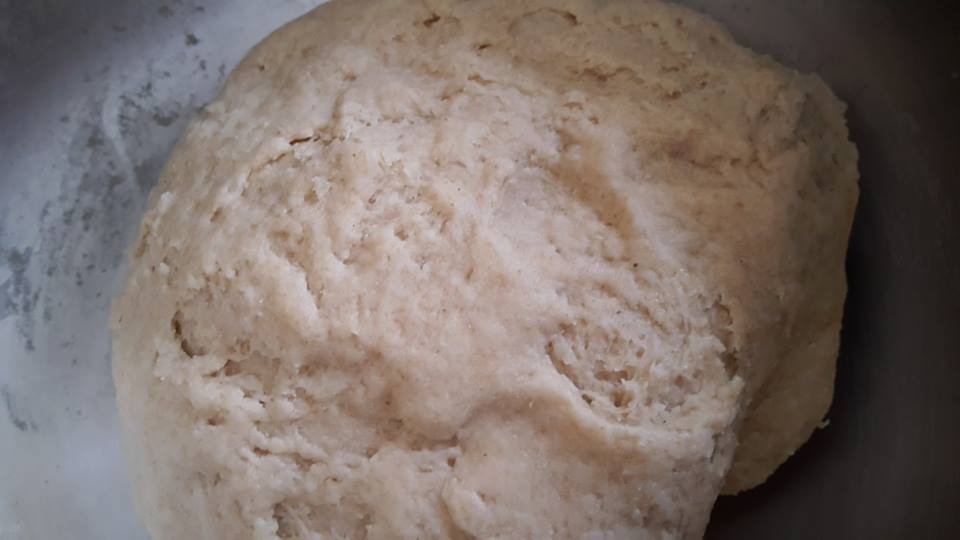
Mix the wheat and refined flours with a pinch of salt and two teaspoons of oil and knead with milk to form a soft dough. Cover the dough and set aside for half hour.
Make small ball of the dough and spread with hand, fill with the jaggery filling, close properly and roll out with rolling pin. Heat the pan and cook the roti on medium heat by turning it on both sides and applying ghee.
Serve hot with ghee and milk. 
Note – Preparation and cooking time is approximately 1 hour. This quantity makes about 10 tilgul polis with 6-7 inch diameter each. If one is allergic to groundnuts, substitute with sesame seeds.


Saturday, January 14, 2017

MyMusingsSangSpeak-Pet Puja - Undhiyo

Undhiyo
Undhiyo is a finger licking Gujarati delicacy, it is a mixed vegetable recipe and forms a one dish meal too. It is made mainly during the winter festival of Uttarayan when these vegetables are plentifully available. It is highly nutritious and consists a good balance of greens, fibre, healthy oils, minerals and vitamins. The preparation is slightly time consuming, but, then the end result is really worth all the effort.
My elder maternal aunt used to make this yummy seasonal recipe that she had learnt from her Gujarati neighbours and I really loved this tasty dish, so I learnt to make it. The Surati Papdi (a particular type of beans) may not be available all over, and it can be substituted with any type of beans available in the local market. The different vegetables that go into the making of Undhiyo are Surati Papdi, carrot, cauliflower, potatoes, yam, raw bananas, brinjals, green peas, onion, fenugreek leaves, coriander, green chillies, ginger and garlic. If either of these vegetables are not available you can still make it even with 4-5 types of vegetables mentioned in the ingredients.
Ingredients
Surati Papdi – 150 gms
Carrot- 1 large
Baby Potatoes – 3-4
Yam – 100 gms
Raw bananas- 3 nos
Brinjals- 3-4 small sized
Green peas – 50 gms
Cauliflower – 50 gms
Groundnuts – 50 gms
Onions – 2 medium
Garlic ginger paste – 1 n ½ teaspoon
Green chillies – 2-3 nos
Fresh coriander – 3-4 sprigs
Oil - 3 tablespoons
Salt – as per taste
Turmeric powder – 1 teaspoon
Carom seeds (Ajwain) – ½ teaspoon
Garam Masala- 1 n ½ teaspoon
For Muthias-
Fenugreek leaves – 1 cup
Bajra Flour – ½ cup
Gram flour – ½ cup
Salt – To taste
Turmeric – ¼ teaspoon
Cumin and Coriander powder – ½ teaspoon
Red chilly powder – ¼ teaspoon
Water – For kneading the muthias and cooking

Method
For the methi muthias, clean and wash fenugreek leaves and knead them with bajra and gram flours with seasoning of turmeric, cumin, coriander, salt and red chilly powder. Make small balls and steam cook for about 10 minutes and set aside.
Clean, wash and chop all vegetables. Soak groundnuts in water for about 10 minutes. Heat oil in a pan, splutter carom seeds and stir fry chopped onions for about 2-3 minutes. Add chopped green chillies, ginger garlic paste and fry for a minute. Add all chopped vegetables one by one, soaked groundnuts along with turmeric, garam masala and salt and stir well. Add about 2 cups water and cover with a lid and cook for about 10 -12 minutes. Add the methi muthiyas and again cover for about 2 minutes. Finally add chopped coriander leaves and give a good stir. Undhiyo is ready, serve hot with roti.

Note – In case, methi or fenugreek is not available, you can make muthiyas of coriander leaves.


Wednesday, January 11, 2017

MyMusingsSangSpeak-Pet Puja - Bhogi Chi Bhaji (Mixed Vegetable)

Bhogi chi Bhaji
Bhogi chi Bhaji is a typical Mahrashtrian recipe, it is a mixed vegetable dish made especially on Bhogi day. Bhogi is a festival celebrated a day before the festival of Makar Sankranti. It is celebrated in nearly all states of India. This is a festival linked with season transition from peak winters to milder cold and also to harvest time.  In Maharashtra, there is celebration to mark Bhogi wherein Pooja is performed and prayers and thanks are offered to God for giving us the bounty in form of a good harvest. There are varieties of vegetables available during this season and they include many kinds of beans like Ghevda, Paavta and Sheng Papdi, Harbhara(green gram), brinjals, carrots, Ber, spring onions, green peas and fresh garlic etc. Sesame (Til) seeds are eaten during this period to beat the cold season. The typical Maharshtrian Bhogi spread includes the mix bhaji, waangyache bharit, paavtyachi amti, bajrichi bhakri (millet bread), dahi (curd) ani loni (butter).

Ingredients
Sheng Papdi – 125 gms
Carrot – 1 large
Brinjals – 4- 5 small sized
Green Peas – 50 gms
Fresh Green Grams – 50 gms
Ber – 50 gms
Onion – 1 large
Garlic – 10-12 cloves
Groundnuts - 50 gms
Roasted groundnut powder – 2 tablespoons
Roasted Sesame seeds – 1 tablespoon
Turmeric Powder – ½ teaspoon
Kanda Lasun Masala – 1 teaspoon
Salt – As per taste
Oil – 2-3 tablespoons
Water – Approx ¾ cup
Chopped Corinader Leaves – 2 teaspoons
 
Method
Clean and chop all vegetables. Soak groundnuts in water for 10-15 mins. Heat oil in a pan and add chopped onion, fry till it gets slightly browned. Add garlic and stir for a minute. Add all chopped vegetables, soaked groundnuts, turmeric and salt and stir well. Add water and stir well, cover with a lid and allow the vegetables to cook for 5-6 minutes. Remove lid, add kanda lasun masala and stir for about 3- 4 minutes. Add roasted groundnut powder and sesame seeds and allow to cook for further 2 minutes. Finally, add chopped coriander leaves and serve hot with Bajra Roti.

Note - Preparation and cooking time is 30-40 minutes. This quantity should be enough for 3-4 persons. You may use any type of beans that is readily available. If no fresh green gram is available, soak dried whole green grams, cook and use. Ber may not available everywhere globally, one can make do without it too.


Tuesday, December 27, 2016

MyMusingsSangSpeak-Pet Puja - Kobi Sukkat (Cabbage Dried Shrimps)

Kobi Sukkat (Cabbage Dried Shrimps)

The Kobi Sukkat (Cabbage Dried Shrimps) recipe is one of its kind,  Maharashtrian side dish and the people who have tasted it are sure to vouch for its awesome taste.  This is an all-time favourite at my place and loved by one and all, especially my daughter. My mother also loved all kinds of dried sea fish and this recipe was one of her favourite too. It is nutritious, easy to make, stir fry dish and tastes good.
Dried shrimps are the small or tiny dried prawns and called Jawla or Sukkat in Marathi. The tiny prawns that are surplus in the season are dried by the fisher folk and are sold for the seasons when fresh prawns are not readily available. Simultaneously, the areas that do not have access to fresh produce from the coastal areas depend on these dried varieties of sea food. The best and fresh variety are generally for sale in the market after October. The fresh dried prawns are light orange in colour and more flavourful. One can clean these by sieving and can be stored in air tight jars for about a year. People make chutneys of the dried prawns and also combine them with various vegetables like onions, tomatoes, spring onions and cabbage etc. to make yummy side dishes.
Ingredients
Dried Shrimps – 50 gms
Cabbage - 150 gms
Water- As per requirement
Oil- 2 tablespoons
Salt- As per taste
Green Chilly- 2 medium
Method
Dry roast the dried shrimps for about 3-5 minutes. Remove from the fire and add water and allow to soak in water for about 15-20 minutes. Drain water and wash thoroughly. Heat oil in a pan and add chopped green chillies. Add chopped cabbage and stir fry for abt 2-3 minutes. Add the drained dried shrimps, salt to taste and stir for about 2-3 minutes. Cover for 2-3 minutes and Kobi Sukkat(Cabbage Dried Shrimps) is ready to be served.


MyMusingsSangSpeak-Pet Puja -Paaticha Kanda Sukkat (Spring Onions Dried Shrimps)

Paaticha Kanda Sukkat (Spring Onion Dried Shrimps)
The Paaticha Kanda Sukkat recipe is a Maharashtrian delicacy made of dried small prawns and spring onions and serves as a good side dish. It is a typically Maharashtrian side dish, a stir fry recipe that is quite easy to make and tastes good with almost anything. This is an all-time favourite at my place and loved by one and all, especially my daughter. My mother also loved all kinds of dried sea fish and this recipe was one of her favourite too.
Dried shrimps are the small or tiny dried prawns and called Jawla or Sukkat in Marathi. The tiny prawns that are surplus in the season are dried by the fisher folk and are sold to be used in the seasons when fresh prawns are not readily available. Simultaneously, the areas that do not have access to fresh produce from the coastal areas rely on these dried varieties of sea food. The best and fresh variety are generally for sale in the market after October. The fresh dried prawns are light orange in colour and more flavourful. One can clean these by sieving and can be stored in air tight jars for about a year. People make chutneys of these dried prawns and also combine them with various vegetables like onions, tomatoes, spring onions and cabbage etc. to make yummy side dishes.

Ingredients
Dried Shrimps – 50 gms
Spring Onions - 150 gms
Water- As per requirement
Oil- 2 tablespoons
Salt- As per taste
Green Chilly- 2 medium


Method
Dry roast the dried shrimps for about 3-5 minutes. Remove from the fire and add water and allow to soak in water for about 15-20 minutes. Drain water and wash thoroughly. Heat oil in a pan and add chopped green chillies. Add chopped spring onions and stir fry for abt 2-3 minutes. Add the drained dried shrimps, salt to taste and stir for about 2-3 minutes. Cover for 2-3 minutes and Paaticha Kanda Sukkat(Spring Onion Dried Shrimps) is ready to be served.