Saturday, April 18, 2015

MyMusingsSangSpeak-Pet Puja - Mutton Pulao

Mutton Pulao
Mutton Pulao was one of the many signature dishes of my Mom. Generally, this was a Sunday Special in our house. The vegetarian variant that she cooked was the Mattar(Green Peas) Pulao. We all in the family relished both these dishes.

Ingredients
Meat – 750 gms( preferably forelimb), about 1 inch sized pieces
Onions- 5 nos, medium sized
Ginger, garlic, coriander paste – 2 tablespoons
Turmeric Powder – 1 teaspoon
Oil – 2 tablespoon
Pure Ghee – 2 tablespoon
Rice – 2 and half cups
Garam Masala Powder – 1 teaspoon
Green Chillies – 2-3 nos
Salt – As per Taste
Whole Garam Masala spices – 2-3 Bay leaves, 2-3 Big Cardamoms, 3-4 Cloves, 2 inch Cinnamon Pieces, 3-4 Black Pepper
Water – Approx one and half litre
Oil – Half cup for frying onions


Method
Make paste of two onions and set aside. Slice two onions lengthwise and deep fry till crisp and golden brown, set these aside for garnish. The fifth onion needs to be cut lengthwise and set aside. Heat oil in pressure cooker and add the onion paste to it. Fry the onion paste till it turns light brown and then add meat pieces to it, stir well, add ginger, garlic, coriander paste and stir well. Add turmeric powder, salt to this and stir for about 3-4 minutes. Now add about a litre of boiling hot water to the meat and pressure cook for about 15 – 20 minutes. Keep aside this cooked meat.

Wash rice and set aside. Heat ghee in a pan, add whole garam masala and sliced onion and stir fry till onion turns golden brown. Add slit green chillies and washed rice and stir well. Add garam masala powder and cooked meat along with the soup. If more water is required to cook rice, only then add extra water. Check salt and add if required. Bring to a boil. Cover with lid and pressure cook for about 10 minutes on medium to low flame. Allow the pressure to release and then garnish with fried onion. Serve with meat curry or gravy of your choice.

Friday, April 17, 2015

MyMusingsSangSpeak-Pet Puja - Methi Malai Mattar

Methi Malai Mattar
 Methi Malai Mattar is exotic,creamy, finger licking peparation  and tastes very nice with plain roti or parathas.

Ingredients 
Methi(Fenugreek) Leaves – 2 cups
Green Peas – 2 cups
Onions – 2 nos
Ginger – 1 inch piece
Garlic- 10-12 cloves
Green Chillies – 2 nos
Milk cream – 1 cup
Cashews – 15 nos
Garam Masala Powder - 1 teaspoon
Oil – 2 tablespoons
Salt – to taste

Method 
Wash Methi leaves thoroughly and stir fry in very little oil for about 3 minutes and set aside. Make a paste of onions and set aside. Grind ginger, garlic and green chilly together and keep aside. Make a paste of cashews and set aside. Heat oil in a pan, add onion paste and sauté till light golden brown. Now add ginger, garlic, chilly paste and stir fry for another 2 minutes. Now add the green peas and salt and cook for about 4-5 minutes by covering with a lid. Then add the sautéed Methi leaves and stir well. Add garam masala, cream and cashew paste and stir well. Cook for about 2-3 minutes and Methi Malai Mattar is ready to serve.

MyMusingsSangSpeak-Pet Puja - Tandlichi Bhaji(Choulai ki Subji)

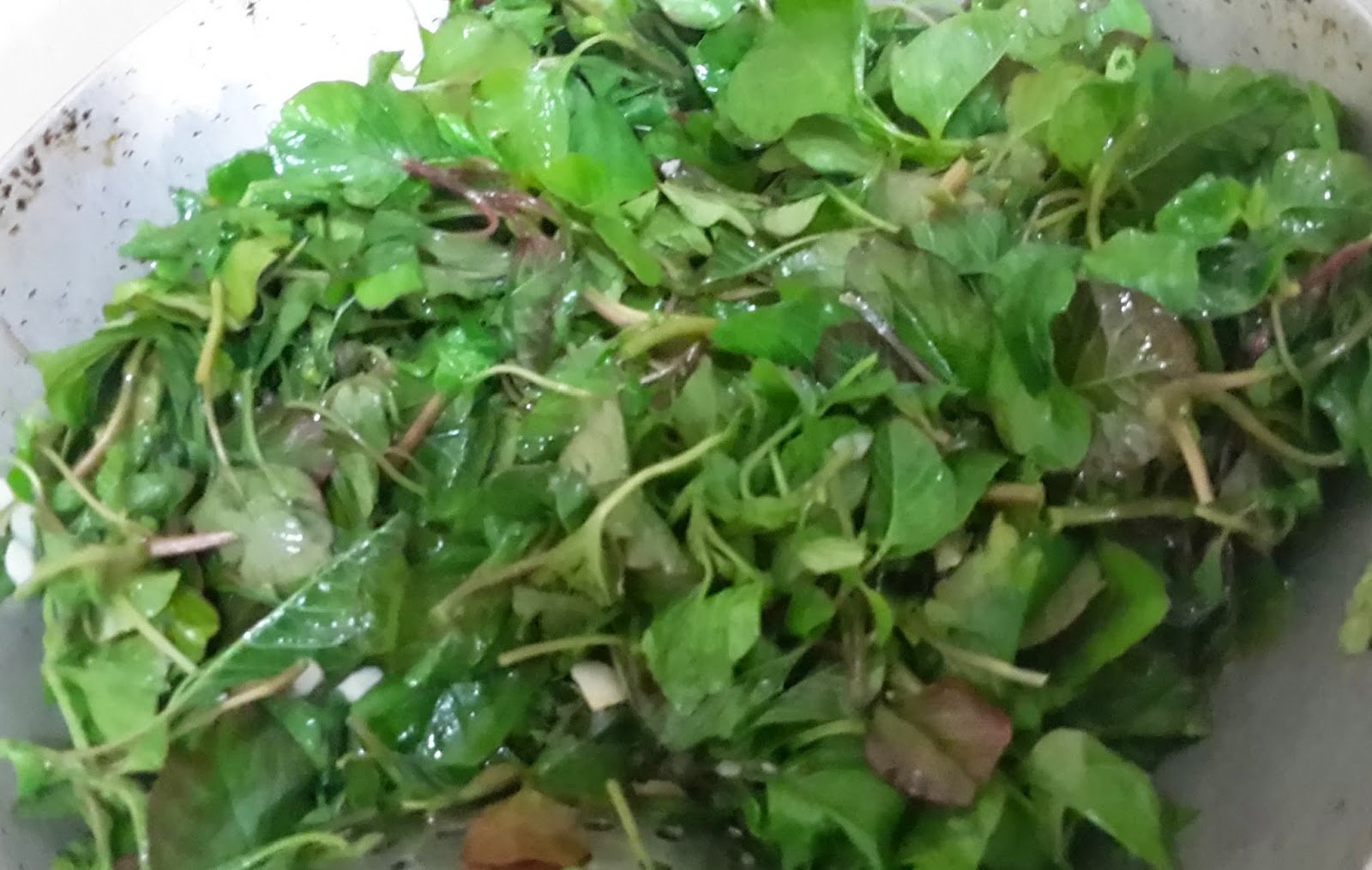
Tandalichi Bhaji(Choulai ki Subji)

Green vegetables play a very important role in Maharashtrian cuisine. There are some Maharshtrian households that have green leafy vegetables on daily basis. There are many varieties of green vegetables available – Methi(Fenugreek), Palak(Spinach), Tandali/Choulai(Amaranth), Rajgira( Amaranth species), Ambadi(Gongura), Kardi(Safflower), Kandyachi Paat(Spring Onions), Shepu(Dill), Aambat Chuka(Green Sorrel), Aluchi Paane or Arbi Patta(Arum Leaves)and so on. Green leafy vegetables are of high nutritional value as they contain many vitamins and minerals.
Most of the green vegetables are prepared in a very simple manner, just stir fried with garlic and green chillies. Sometimes, onions or roasted groundnut powder are added and sometimes it may be of thick gravy consistency, wherein gram flour (besan) is used to thicken and homogenize. Various daals (split pulses) are also used in combination with different leafy vegetables.
Leafy vegetables need to be cleaned properly, sometimes you may take only leaves in a recipe and sometimes you may take the tender stalks too. Many people tend to get lazy as these vegetables require a lot of cleaning and hence, do away with them in the diet. Let me emphasize here that despite all the cleaning efforts involved, the health benefits outweigh everything and one must include these in their daily diet.
Tandali is one of my favourites and it tastes best with Jwarichi Bhakri(Jowar or Sorghum ki Roti).

Ingredients
Tandali (Choulai, Amaranth) – 2 bunches, nicely cleaned and washed thoroughly
Garlic cloves – 13 -14 nos
Green Chillies – 2-3
Oil- 1-2 tablespoons
Salt – As per taste

Method
Heat oil in a pan. Add crushed garlic and chopped chillies. Add Tandali leaves and stir well. Add salt and stir well for 2- 3 minutes. Allow to cook on low flame for another 2-3 minutes till water nearly dries up. Tandlichi Bhaji is ready to be served.


MyMusingsSangSpeak-Pet Puja- Fish Fry

Fish Fry


Fish can be fried in many ways, either it can be deep fried or shallow fried. Every place or household has a typical way of marinating fish. The fish needs to be marinated well with right amount of spices and flavouring so that it does not lose its original taste. My mother liked minimum flavouring so most of the time she marinated fish only with salt, turmeric and chilly powder and shallow fried with little oil and the taste still lingers on. I relish marine fish more than freshwater varieties. I have been in many places where marine fish is not readily available, so I started cooking the freshwater varieties like Rohu, Catla, Seelan, Singhada etc too. You may use a variety of marinades as per taste and choice.
While buying fish do take care to buy good quality, well stored products. Fish is generally not eaten in the months that do not have "R" in their spelling(May, June, July, August), reason being that fish spawn during this season. Another reason is that seas are quite choppy and the fishermen do not go to the sea, it is only after offering coconut on occasion of "Narali Pournima"(approximately Mid August), that fishing restarts.

Ingredients
Sole (Seelan) Fish – 500 gms (deboned and cut into 3 inch sized pieces)
Turmeric Powder – ½ teaspoon
Chilly Powder – 1 teaspoon
Salt – As per taste
Ginger garlic coriander paste –1½teaspoon
Lemon Juice – 2 teaspoons
Rice flour – 2 tablespoons
Gram flour – 2 tablespoons
Oil – half cup


Method
Mix turmeric, chilly, salt, lemon juice and garic ginger coriander paste well and apply this marinade paste to the fish pieces. Refrigerate the marinated fish pieces for 1-2 hours so that the marinade is absorbed well. For the coating, mix together rice and gram flours and add a pinch of salt, turmeric and chilly powder to this mixture. Heat 2 tablespoons of oil in a pan and coat the fish pieces in the coating mixture and shallow fry by turning sides alternately till done. Shallow frying needs to be done on medium flame so that the coating becomes crispy and fish is cooked well. Once frying is done, remove the fish on paper to drain out the excess oil. Serve with tomato sauce, green chutney or tamarind chutney. Accompaniments can be rice and solkadhi.

Note –
For the tangy taste, you can use tamarind or kokum in place of lemon juice. In Bengal, mustard paste is used to marinate fish. If you like green chilly, you may use it in place of red chilly powder. If you want the fried fish to be more flavourful, then add a pinch of cumin and coriander powders.

Thursday, April 16, 2015

MyMusingsSangSpeak-Pet Puja- SolKadhi

Solkadhi
Solkadhi, rather Soulkadhi is a tasty, tangy, digestive recipe of Konkan and Goan coastal cuisine. It is made of fruit of Kokum plant(Garcinia Indica), indigenous species of Western Ghats, India. Kokum is called Ratamba in Marathi. This recipe is an essential side dish of vegetarian as well as non vegetarian platter and tastes very well with fish recipes specially. Kokum fruit is extremely sour and has medicinal as well as digestive properties. The kokum fruit is available in the market in its fresh or dried form. Fresh kokum is available only during a particular season. You also get pure kokum extract and a sweetened extract as well. I am using dried kokum for my recipe of solkadhi. The kokum are dried along with salt as preservative so you need to keep a watch while adding salt.  Cumin powder addition is my variation.

Ingredients
Dried Kokum – 15-20 nos
Fresh coconut (grated) – 2 cups
Garlic cloves – 10-12 nos
Cumin Powder – 1 teaspoon
Green Chillies – 2-3 nos
Salt – As per taste
Water – As per requirement
Corinader leaves – 1 teaspoon

Method
Soak Kokum in about a cup of warm water. Blend the fresh grated coconut in a blender with water and extract coconut milk by straining through a strainer. You can get about 5 cups of coconut milk from 2 cups grated coconut. Grind the chillies and garlic and add to the coconut milk. Crush the soaked kokum with hands and strain the liquid thorugh a strainer. Mix it with coconut milk. Add cumin powder and salt. Finally garnish with chopped coriander leaves. Serve solkadhi slightly chilled. This is uncooked recipe and hence needs to be consumed fresh and cannot be stored for long.

Note
You can use tinned coconut milk that is readily available nowadays. Dry coconut milk powder is also available which can be rehydrated and used, but, the taste of fresh coconut milk is unbeatable.


Monday, April 6, 2015

MyMusingsSangSpeak-Pet Puja - Bread Rolls

Bread Roll

Another favourite bread snack, the bread rolls, yummy and one could just go on eating. Health conscious people, please give this one a miss. I learned to make bread rolls in our cooking class in school, the recipe was taught by Mrs Lazarus, and the filling was that of coconut chutney with sweet sour flavouring. My mom made bread rolls using mutton kheema stuffing. I use the most basic filling, that of the humble aloo(potato) subji. 

Ingredients
Bread Slices – 10 nos
Potatoes – 5-6 medium sized
Onions – 2 medium
Green chillies – 3-4 nos
Curry leaves – 10-12 nos
Asafoetida – A pinch
Cumin seeds – ½ teaspoon
Mustard Seeds – ½ teaspoon
Turmeric Powder - ½ teaspoon
Ginger, garlic, coriander paste – 1 teaspoon
Chopped Coriander Leaves – 2 tablespoons
Lemon Juice - 1 teaspoon
Sugar -1 teaspoon
Salt – As per Taste
Oil (for Subji) – 2 tablespoons
Oil (for frying) – 2 cups approx
Water - for soaking bread slices

 Method
 Boil the potatoes, peel and slice fine. Heat oil in a pan, temper it with asafoetida, curry leaves, mustard and cumin seeds and chopped green chillies. Add chopped onion and stir fry till it becomes slightly golden brown. Add ginger, garlic, coriander paste, potatoes, turmeric powder, salt, sugar, lemon juice and mix well. Cover with lid for about 2 minutes and finally add chopped coriander leaves. Remove from fire and set it aside.
Take water in a plate or broad based utensil. Dip one bread slice in water at a time, place it between both palms and squeeze out the extra water. Take a spoonful of the aloo subji and place it in the centre of the slice and close from all sides to make it into a roll. Make all the rolls and set aside. Heat oil in a pan till it is smoky hot, lower the flame and fry the bread rolls till they turn an even golden brown from all sides. Remove the bread rolls on paper to remove excess oil and serve with green chutney or tomato sauce.

Note
Variations could be filling of many kinds like sweet corn plus cheese, chicken kheema or vegetables of your choice.


Saturday, April 4, 2015

MyMusingsSangSpeak-Pet Puja - Bread Poha

Bread Pohe/Upma/Chiwda

Bread Pohe/Upma/Chiwda or Phodnicha Bread is a breakfast or teatime snack, easy to make and tastes good too. This is similar to phodnichi chapati or bhakri(chapatiche/bhakriche tukde, snack made of leftover chapatis or bhakris). This snack is my daughter’s favourite.

Ingredients
Bread – 10-12 slices
Onion – 1 large
Tomato – 1 small
Green chillies – 1 or 2
Curry Leaves – 10-12 nos
Coriander leaves – 5-6 sprigs
Oil – 2 tablespoons
Turmeric Powder – ¼ teaspoon
Red Chilly Powder - ¼ teaspoon
Cumin seeds – ½ teaspoon
Mustard seeds - ½ teaspoon
Salt- As per taste
Sugar – ½ teaspoon
Lemon Juice – 1 tablespoon
Roasted groundnut powder (Optional) – 1-2 tablespoons

Method
Powder the bread slices coarsely in a grinder/mixer. Heat oil in a pan and add cumin and mustard seeds. Once the seeds splutter, add chopped green chillies, curry leaves and chopped onion. Stir for 2-3 minutes till onion turns a light golden brown and then add coarsely powdered bread. Add turmeric, red chilly powder, salt,sugar and lemon juice and stir well. Keep on a low flame for about 7-8 minutes and stir occasionally, this way the bread poha will become crunchy. Now add chopped toamto and stir for a minute. Finally, add groundnut powder and chopped coriander leaves, stir for about 2-3 minutes and bread poha is ready to be served.

Note- Serves 2-3 persons.